Founder and director of the Tech Policy Hub. Ido is an assistant professor in UMD's College of Information and an affiliate professor in the School of Public Policy, studying the governance of digital technologies through novel computational methods to advance evidence-based monitoring and evaluation of tech policy implementations, building adaptive models for tech regulation.
Sipho is a research engineer whose professional work focuses on Causal Inference and Artificial Intelligence. His academic work explores topics at the intersection of technology, law, and policy through the lens of mechanism design. He is also the Founder and Executive Director of the Phronesis Institute.

Charles Harry is a senior researcher and practitioner with over 20 years of experience in intelligence and cyber operations. He directs the Center for Governance of Technology and Systems (GoTech) and is an Associate Research Professor in UMD's School of Public Policy, researching how to measure the effects of cyberattacks to help policymakers assess strategic risk.

Mark McDermott is a researcher and engineer with over 15 years of experience spanning cybersecurity, disinformation, machine learning, and big data. His work crosses mathematics, engineering, and analysis, from U.S. defense applications to international research collaborations.

Michelle Mazurek is an associate professor of computer science at the University of Maryland and Director of the Maryland Cybersecurity Center. Her research focuses on human-centered computer security, understanding and improving how professionals and everyday users learn, adopt, and experience security and privacy practices.

Gabriel Kaptchuk is an assistant professor in UMD's Department of Computer Science, with a joint appointment in the University of Maryland Institute for Advanced Computer Studies (UMIACS). His research centers on human-centered cryptography, making privacy-preserving systems intuitive and accessible.
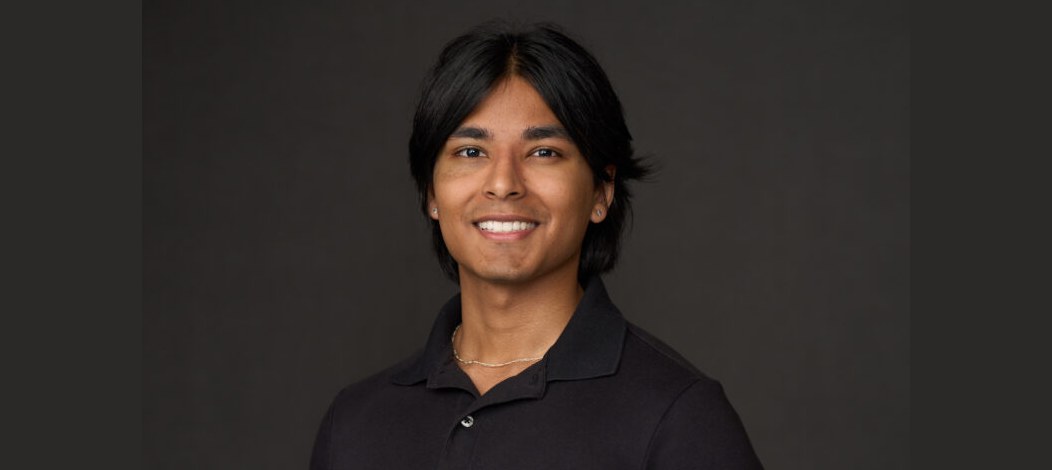
Parthav Poudel is a Computer Science and Cybersecurity student at the University of Maryland (Class of 2026) and a Department of Defense SMART Scholarship recipient. He conducts research at UMD's College of Information on data infrastructure, web privacy, and misinformation, building web-crawling and data pipelines that inform cybersecurity and misinformation policy.
Jessica Vitak is a professor in UMD's iSchool and an affiliate professor in the Communication Department and the Joint Program in Survey Methodology. She runs the Privacy Education and Research Lab (PEARL), studying how privacy concerns shape technology adoption and developing tools for more informed data-sharing decisions.
Patrick Parham is a Ph.D. student at UMD's College of Information studying advertising and media technology, with a focus on proposals for a post-third-party-cookie web. He previously worked in the programmatic advertising industry.
Giovanni Luca Ciampaglia is an assistant professor at UMD's College of Information, where he leads the Computational Socio-dynamics Laboratory. His research examines how information quality and propagation shape trust and reliability in social computing systems.
Irene Pasquetto is an assistant professor at UMD's College of Information. Her research spans data governance and open data practices, mis- and disinformation studies, and related questions in algorithmic fairness, digital labor, and open science.
Cody Buntain is an assistant professor at UMD's College of Information, studying how people use online information spaces during crises and political unrest. He is a research affiliate at NYU's Center for Social Media and Politics, and his work has been covered by outlets including the New York Times and WIRED.
Katie Shilton is a professor at UMD's College of Information studying technology and data ethics. She leads the Ethics & Values in Design (EViD) Lab and co-directs the NSF/NIST-funded TRAILS Institute on trustworthy AI, with recent work spanning content moderation and data ethics education.
Laura Fichtner is a postdoctoral researcher with the TRAILS Institute, researching how artificial intelligence, particularly generative AI, can be developed and governed in a participatory, democratic manner. She earned her doctorate from the University of Hamburg with a thesis on platform governance and content moderation regulation in Germany.
Amy Winecoff is a Senior Technologist in the AI Governance Lab at the Center for Democracy & Technology, developing technically informed strategies for AI governance and measurement. She previously worked as a data scientist building recommendation systems and was a research fellow at Princeton's Center for Information Technology Policy.
No people match your filters.
A monthly briefing on developments at the intersection of technology, law, and policy.